
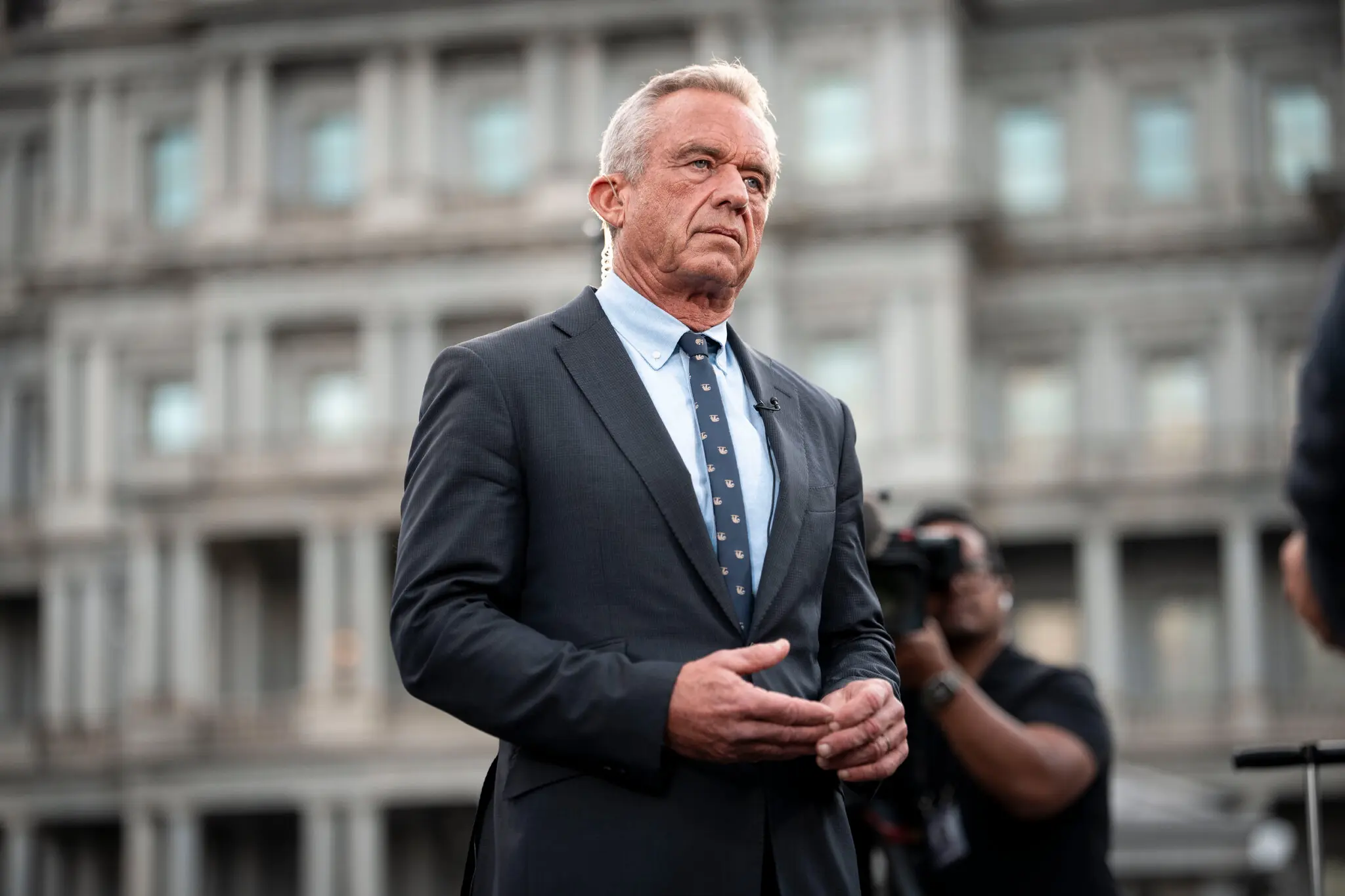
HHS Secretary Robert F. Kennedy Jr. shifts on vaccine policy April 16, 2026. (Doug Mills/The New York Times)
From April 16 to April 22, 2026, U.S. Department of Health and Human Services (HHS) Secretary Robert F. Kennedy Jr. testified before committees in Congress for a total of seven hearings. These were intended to address the HHS’s proposed 12.5% budget reduction and discuss prominent issues within the department. Kennedy was asked to clarify and defend his stances on topics ranging from vaccines to Medicare fraud.
The Chronic Disease Epidemic and the Make America Healthy Again Initiative
In the House Ways and Means Committee hearing on April 16, Kennedy was asked by multiple members about his department’s work on chronic health issues. Republican Representative Jason Smith (MO-8), the committee chair, opened the hearing on April 16 by stating, “more than six in ten Americans have at least one chronic disease.” Kennedy’s opening statement also referenced the chronic disease epidemic, which includes heart disease, diabetes, and cancer that lasts a year or more, caused by nutrition and lifestyle choices. He also spoke about the Make America Healthy Again (MAHA) initiative and celebrated his department’s work on most-favored-nation drug prices for Americans, transparency, and a crackdown on fraud and abuse. The most-favored-nation drug prices for Americans policy intends for Americans not to pay more for prescription drugs than people in other wealthy nations do.
Republican Representative Vern Buchanan (FL-16) advocated for the need to “prioritize prevention as the key to reversing trends in heart disease, obesity, and diabetes.” He spoke about “science-based guidelines” that back these new standards, which he said need to be driven into U.S. culture.
Kennedy’s solution to chronic health issues is the newly instated version of dietary guidelines. These encompass an upside-down pyramid, a flip of the one that has been known and used across the U.S. and was last updated in 2011. These new dietary guidelines are intended to reduce chronic disease and government spending on care for illnesses caused by a poor diet. Kennedy stated that the “bedrock of health–the key to reversing the chronic disease epidemic–is nutrition.”
These guidelines will be used for school lunches and the Supplemental Nutrition Assistance Program (SNAP), and they may raise food costs for families. According to Healthy SNAP Florida, the plan is to invest more money into healthy food options for families receiving SNAP assistance. Yet, it has the potential to increase grocery costs for families who are only allotted a particular amount through SNAP. Families would be increasingly limited to buying whole foods based on these guidelines, raising the price per calorie to feed a family on a specific stipend, as many high-calorie foods such as carbohydrates and fats are less expensive. SNAP benefits are not to be used for foods that do not provide nutritional value. Stores that would like to accept SNAP are required to meet increased nutritious food options. SNAP participation has declined in all states except Alaska due to rising costs for the states. The focus on SNAP for state budgets may affect budgetary pressures.
Kennedy’s Vaccine Stance
In the House Education and Workforce Committee hearing on April 17, the committee began its questioning with the measles outbreak. Republican Representative Tim Walberg (MI-5) asked Kennedy about his responsibility for the outbreak, which Kennedy denied, saying the parents had to have opted their children out of the vaccine before he took office. He also noted that the parents of two Mennonite children who died in the hospital from measles in February and April 2025 believe that their children could have survived if they had received better hospital treatment.
Democratic Representative Mike Thompson (CA-4) criticized Kennedy’s lack of a degree in a relevant field for his position as HHS Secretary. Former HHS secretaries have had more experience in the medical field, yet Kennedy was a lawyer before his secretary position. Additionally, the congressman made claims that anti-vaccination efforts are “helping make diseases deadly again” with reference to the rise in measles cases under both terms of the Trump administration. Measles was previously in an elimination status, but the disease is now considered homegrown due to the rise in domestically-originated cases. Thompson told Kennedy that he should not be in office. Kennedy claimed that “the measles outbreak began in January 2025, before [he] took office.” The Measles outbreak did begin before Kennedy was sworn in, but he was a strong critic of the vaccine’s effectiveness prior to his confirmation, claiming that vaccines could cause autism.
Kennedy’s stance on vaccines was a key point in his hearings, and he stated that his department now promotes the measles vaccine in the Senate Finance Committee hearing.
Medicare and Medicaid
New York’s Medicaid waiver programs, which pay adults to care for the elderly, are a form of employment in New York. Some Republicans have accused the government of inadequately determining if the caretakers are doing their job.
Republican Representative Neal Dunn (FL-2) focused on fighting fraud, claiming that perpetrators of Medicare and Medicaid fraud are not being held accountable due to Trump’s pardoning and lessening of their sentences. He claimed that this is harming the patients while also creating issues with clemency. Kennedy responded with the notion that the fraud issue is bipartisan, yet the “application and implementation” has not been. This is in terms of who is convicted, how they are punished, and who is pardoned.
More on Fraud
Republican Representative Neal Dunn (FL-2) focused on fighting fraud, claiming that perpetrators of Medicare and Medicaid fraud are not being held accountable due to Trump’s pardoning and lessening of their sentences. He claimed that this is harming the patients while also creating issues with clemency. Kennedy responded with the notion that the fraud issue is bipartisan, yet the “application and implementation” has not been. This is in terms of who is convicted, how they are punished, and who is pardoned.
In the House Education and Workforce Committee hearing on April 17, Democratic Representative Joe Courtney (CT-2) discussed the increased number of uninsured and asked about Kennedy’s stance regarding shifting Medicare to the states, which Courtney warned against. Kennedy replied by denying that he had a particular proposal in mind to dismantle Medicaid or Medicare programs, but that President Trump’s policy would “save Medicare.” Kennedy also alleged that the Biden administration was responsible for Medicare and Medicaid fraud.
Democratic Representative Lloyd Doggett (TX-37) of the House Ways and Means Committee also expressed concerns about fraud in a combative question-and-answer session. Doggett claimed that the current administration is soft on fraud crime. Doggett alleged that hundreds of suspected fraudsters were reinstated into their jobs as insurance agents and brokers, and that Kennedy is too permissive of brokers and agents who committed fraudulent schemes. Doggett also noted the presidential pardons of people who were convicted of Medicare fraud schemes. Kennedy responded by stating that this is a bipartisan issue. He continued to express that he believes the issue was prevalent before he assumed office, blaming the Biden administration. He then moved on to Medicaid-funded home healthcare, calling it fraudulent and deflecting from the 850 insurance agents and brokers that Doggett was referencing. When the two reverted back to this topic, Doggett and Kennedy clashed over whether they were legitimately investigated.
Implications of the Congressional Hearings
Across the seven congressional hearings, many Republicans commended Kennedy’s efforts to combat the chronic disease epidemic, while Democrats criticized his leadership and vaccine skepticism. Bipartisan critiques of the HHS’s proposed 12.5% budget cut were a common theme in the hearings as well. While Kennedy provided a rationale for the cuts, members of both parties acknowledged the problems that may arise across various areas, including research and social services.
