
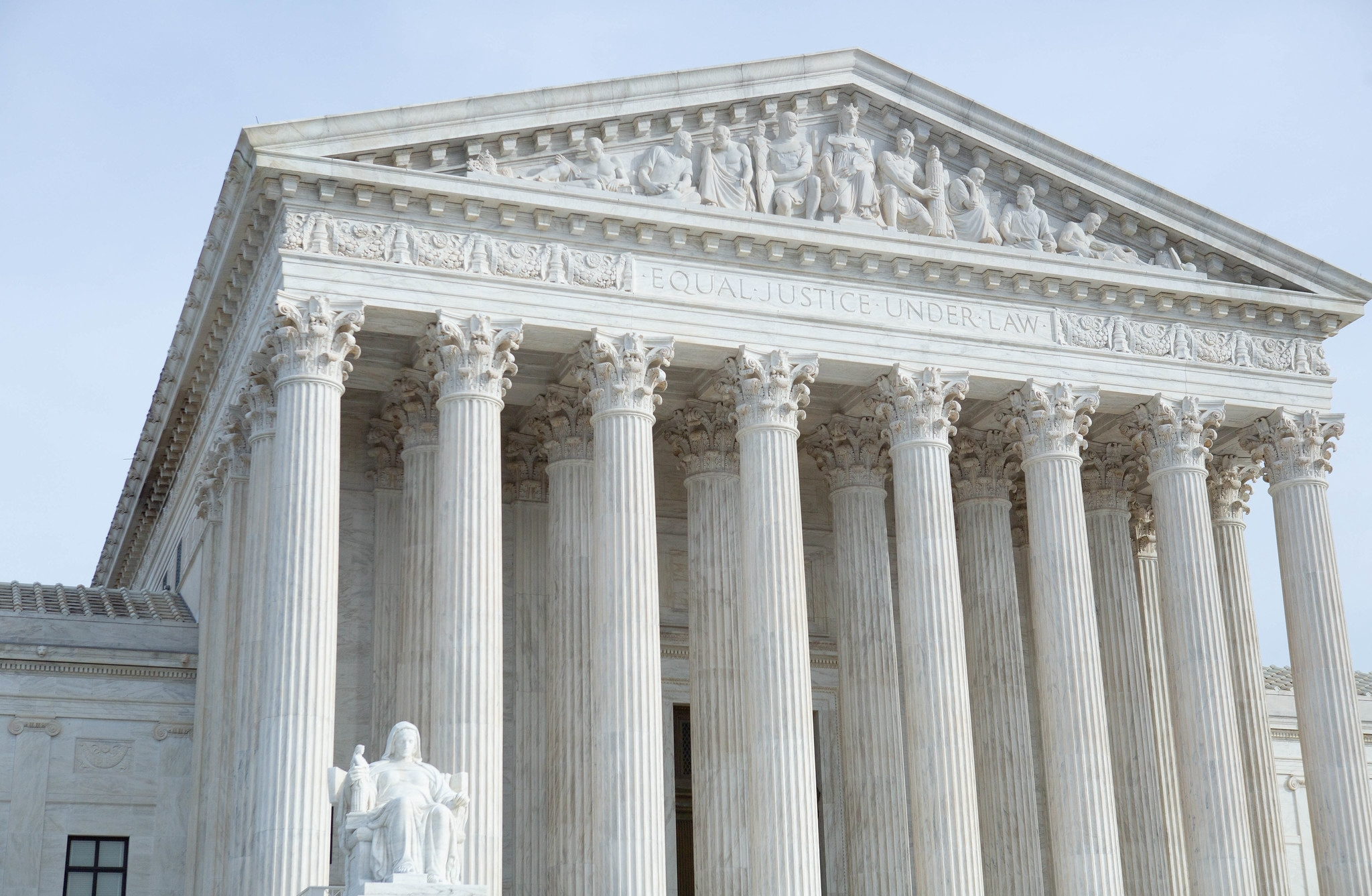
(Anthony Quintano via Flickr)
On Monday, September 29th, the Supreme Court began its session. The court has agreed to hear over twenty-six cases so far this term. The cases range from whether officers can enter a home without a warrant if they think there is an emergency to the constitutionality of gender conversion therapy. One case involving coordinated campaign expenditures could potentially lead to a significant change in election practices and Supreme Court jurisprudence, according to Richard Pildes and Bob Bauer, constitutional scholars and professors at New York University School of Law: a case called National Republican Senatorial Committee v. Federal Election Commission (NRSC v. FEC).
Understanding Coordinated Contributions
When raising campaign funds, candidates can receive contributions from many sources. While a candidate can receive contributions from private individuals, they can also receive funding from their parties. Parties may, with no spending cap, independently spend for a candidate. For example, parties may purchase ads and other promotional material, so long as they do not “coordinate” with the candidate. If they were to buy promotional material with a candidate’s knowledge, or on the candidate’s behalf, then the contribution would be considered a “coordinated contribution.” While it can vary by state, party level, and the specific seat in the government a candidate is seeking, these types of party transfers are capped.
When money is donated anonymously and its source is untraceable, it is often referred to as “dark money.” Proponents of coordinated contribution limits argue the possibility of outside collusion in elections is heightened through untraceable funding and that by exerting control over the amount of funds, elections are protected from unknown influence.
Campaign Finance: According to the Supreme Court
The Supreme Court has previously upheld the government’s ability to regulate coordinated contributions saying it serves a compelling government interest. In Colorado Republican Federal Campaign Committee v. Colorado I, the Court first held coordinated contributions were constitutional. The Court later upheld its ruling in Colorado I in a case known as Colorado II. In Colorado II, the Court said the FEC had a compelling reason to regulate outside influence in elections, by “minimiz[ing] [the] circumvention of [individual] contribution limits,” which possibly nefarious actors could use to exploit coordinated contributions.
The origin of a broader reading of campaign finance law began in 2009 with Citizens United v. FEC. Citizens United is a conservative non-profit who in 2008 released a documentary named Hillary: The Movie, criticizing then-candidate for president Hillary Clinton. At issue in the ensuing legal battle was the FEC’s attempt to enforce the Bipartisan Campaign Reform Act’s (BCRA) prohibition on independent corporate spending in elections against the Citizens United film. The FEC argued Citizens United’s documentary, particularly in its advertising, was an independent contribution to other candidates in the Democratic primary because of its negative depiction of Hillary. The FEC cited Austin v. Michigan Chamber of Commerce and McConnell v. FEC. These two cases established corporate speech as something the government had a compelling interest in regulating. On the other hand, Citizens United argued that even though they were a corporate body and not an individual, they still had individual free speech rights as a corporation. In addition, Citizens United contended that their documentary was not a political campaign against Hillary, but that even if it were, it would be protected speech. In its decision, the Supreme Court ruled in favor of Citizens United, establishing the standard of unlimited independent campaign contributions from corporations.
Case Background
The current campaign finance case arose when then-Senator J.D. Vance, with the NRSC on his behalf, sued the FEC in 2022 over its caps on coordinated expenditures. In their District Court complaint, the NRSC argued the caps on contributions were an abridgement of the constitutional right to political participation, which includes spending and raising money with candidates. The FEC replied, citing Supreme Court precedent to the contrary in FEC v. Colorado, where the Court held coordinated work in campaigns was separate from protected free assembly. The District Court ruled in favor of the NRSC. Hesitant to overrule Colorado II, they still granted the NRSC’s constitutional question to the Sixth Circuit Court of Appeals. The NRSC lost in the Sixth Circuit, which refused to overturn precedent consistent with the District Court’s ruling; both courts qualified their rulings by saying they were hesitant to overturn Supreme Court precedent. The Sixth Circuit, in its opinion, said NRSC made a fair point that, with changes to the way campaign financing has been conducted since 2014, the NRSC’s argument might be compelling.
The NRSC’s Case
In their brief before the Supreme Court, the NRSC argues that both coordinated contribution limits and the concept of government regulation of party interaction with candidates are unconstitutional. They argue that a party’s sole purpose is to work with candidates, helping to coordinate the candidates’ successful election. They believe any laws which curtail this purpose, interfere in the candidate-party relationship, and/or block messaging pushed by the two are a violation of free speech protections. The NRSC also argues coordinated limits are obsolete in the modern campaign finance world of massive fundraising bodies and campaign contributors such as Political Action Committees. Altogether, the NRSC believes coordinated contribution limits are an unnecessary abridgement of protected speech.
The FEC’s Reply
Unlike most cases the Supreme Court hears involving the federal government, the government is not supporting the federal agency challenged in the case. The Department of Justice’s (DOJ) official position is in support of the NRSC. In its reply brief, the DOJ supported a review and reversal of Colorado II and the current prohibitions on coordinated contributions, called for by the NRSC. Under these circumstances, the Supreme Court divided the NRSC’s oral argument time between its private lawyers and the DOJ. The Court then appointed the Global Chair of Latham & Watkins’ Supreme Court & Appellate Practice division, Roman Martinez, as amicus curiae counsel to represent the FEC in oral arguments.
On behalf of the FEC, Latham & Watkins lawyers argue coordinated contribution limits are necessary and constitutional. They say caps on party contributions are a part of a wider web that protects elections from monetary influence. According to their brief, political parties can be a functional way to sidestep other capped methods of donation. The brief emphasizes that equally enforcing caps on parties and individual donors promotes free speech rather than abridging it. The FEC contends that if parties were allowed unlimited coordinated action as entities, they would have more speech power than the average citizen. The FEC also makes a procedural argument for dismissal. They also note that since the executive branch agrees with the NRSC and is refusing to enforce Section 30116(d) against them, the case should be dismissed as improvidently granted and the Court should not rule on the legal merits at all.
Looking Forward
The Supreme Court will hear oral arguments in NRSC V. FEC on December 9th, 2025. A decision is expected by June of 2026.
