
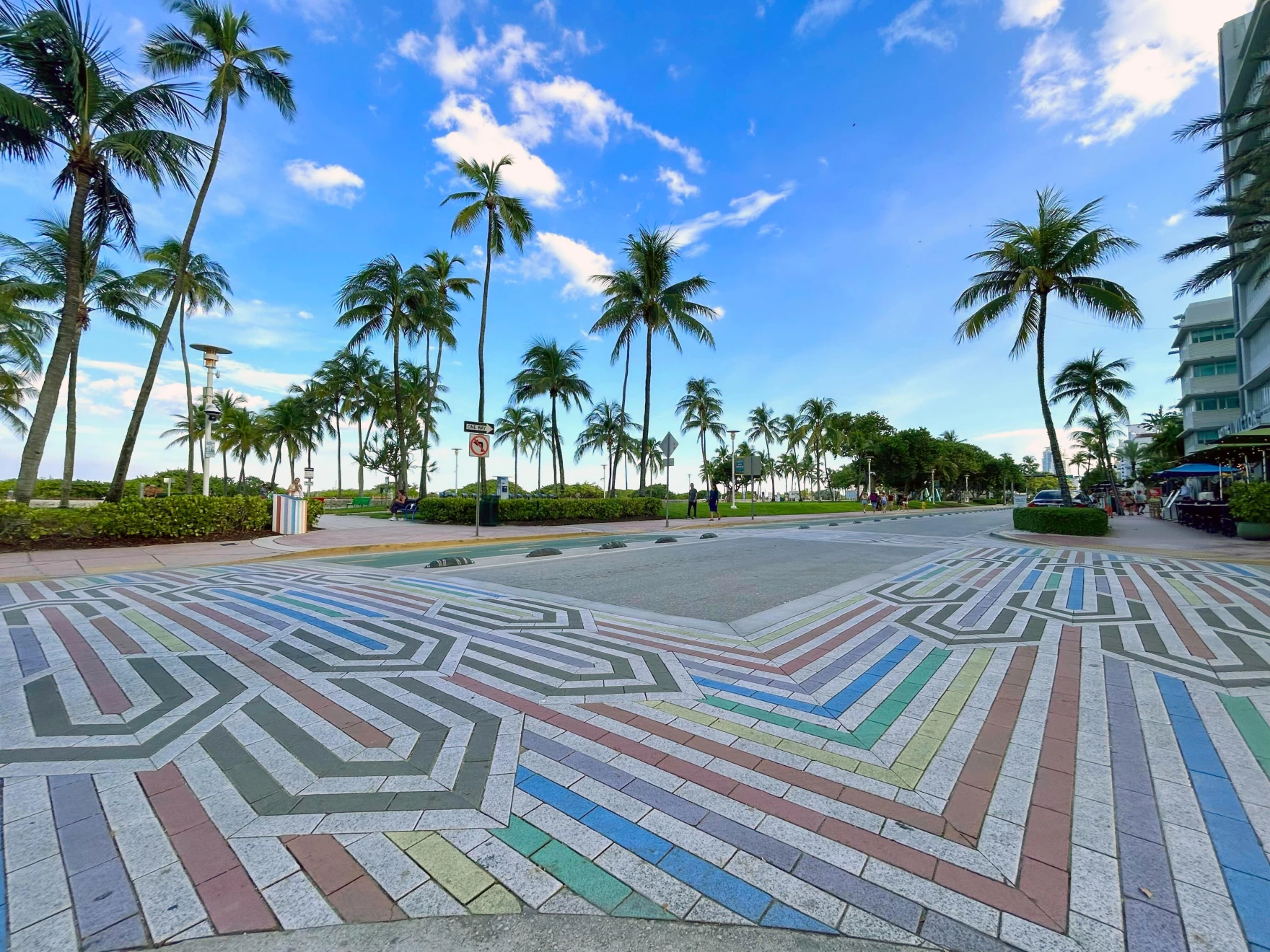
Miami’s Ocean Drive Rainbow Crosswalk (Matheus Sanchez / WLRN)
Throughout the state of Florida, crosswalk murals are disappearing overnight due to compliance with Florida Senate Bill 1662, which declares any non-standard crosswalk markings a violation of transportation safety and subject to removal under the authority of the Florida Department of Transportation (FDOT).
A debate has sparked over the intentions behind the bill. Critics believe politics, not safety, is the driving force behind orders to remove crosswalk art from Florida streets in order to control the spread of political ideologies. Opposition has spread throughout the state, with several cities submitting appeals against the ban. Other cities are complying and removing crosswalk art, finding other avenues for artistic and political expression.
What is Senate Bill 1662?
Enacted on July 1, 2025, Florida Senate Bill 1662 addresses several transportation provisions, including the removal of non-standard crosswalk markings. The bill is intended to promote transportation safety by authorizing the “withholding of state transportation funds” from cities with traffic signals “not in compliance with FDOT’s uniform system of traffic control signals.” The FDOT claims that crosswalk murals may distract “motorists and pedestrians and [cause] confusion that jeopardizes public safety.”
On June 30, the FDOT released a memo ordering all crosswalk markings declared in violation of Senate Bill 1662 “to be immediately remedied.” The memo is intended to enforce the FDOT’s Standard for pavement markings, which include turn arrows, directional words, and lane-specific terms.
Per these new regulations, major crosswalk murals now face removal, modification, or replacement in an attempt by the Florida Senate and FDOT to improve transportation safety.
Debate Over Senate Bill 1662
The enactment of Senate Bill 1662 has sparked varying reactions across the state, as major political murals have been removed in accordance with the updated policy. Florida Governor Ron DeSantis expressed in an X post, “We will not allow our state roads to be commandeered for political purposes,” leading several state officials to view his signing of the bill as a political attack.
Among opposing officials, Orlando Mayor Buddy Dyer described the removal of a rainbow crosswalk commemorating the 2016 Pulse nightclub shooting as “a cruel political act” against the LGBTQ+ community. Dyer’s concerns are echoed by other Florida officials, such as Florida House Representative Anna V. Eskamani and Florida State Senator Carlos Guillermo Smith, who called the recent enforcement of pavement marking standards an “excuse to punish LGBT visibility,” as the FDOT standards for pavement markings have been in effect for several years.
Following the removal of Orlando’s Pulse nightclub crosswalk memorial, Smith joined in the opposition by chalking in the artwork, but was soon faced with an FDOT warning against marking the street. Other participants were also arrested following the protest. Despite DeSantis’s claims that all crosswalk art, not just LGBT art, is being removed, Smith continues to argue that the legislation is a “depraved political act,” despite voting yes on the bill himself in a 37-0 Senate vote.
Many murals expressing more conservative political ideologies, such as Tampa’s “Back the Blue” mural, and several non-political murals have also been removed, indicating a nonpartisan implementation of the new policy, with Governor DeSantis promising an “evenhanded” enforcement. Other state officials, such as FDOT Secretary David Perdue, have shown support for the bill’s intention to remove all political art from the Florida streets.
Officials Respond to Senate Bill 1662
St. Petersburg Mayor Ken Welch has openly stood against the legislation, calling the policy “a state overreach” to quiet the voices of the city’s residents. Citing a 2016 study conducted by the city of St. Petersburg concerning a mural installed at the intersection of a major road, Welch presented the state with data demonstrating an increase in transportation safety arguing the City should be allowed to keep the mural. The three-year study revealed a “70% decrease in overall crashes” at the intersection and a 100% and 25% increase in accidents at intersections east and west, respectively, of the Central Avenue intersection where a mural was not installed. Welch’s efforts, however, have proved fruitless, and the City has complied with the state’s order to remove the murals, vowing to instead find other avenues of artistic and political expression for the city.
Public Opinion on Senate Bill 1662
Citizens of South Florida have expressed both dissatisfaction and support of the new ban on crosswalk art. In an informal poll conducted by WLRN South Florida, ninety percent of participants rejected the claim that crosswalk art poses a threat to transportation safety concerns, with many claiming that the murals assist safety by drawing “attention to crosswalks.” Over half of the participants agreed with a statement saying the use of crosswalks for political expression constituted free speech, deserving protection, not removal.
In the poll, the minority in favor of removing crosswalk art showed strong voices despite the overwhelming majority in support of the crosswalk art. These supporters agreed with FDOT’s concerns about safety, citing painted crosswalks on streets as a driver distraction. One participant claimed the political statements of rainbow crosswalks were “intrusions” that “should not be allowed” on city streets. Another minority participant in the same poll noted the artwork looked nice, but artwork with political messages often discriminated against viewers of opposing beliefs.
Despite debate over Senate Bill 1662, the majority of Florida mayors and cities have complied with the new standard, and crosswalk murals continue to be removed throughout the state.

Excellent information!