
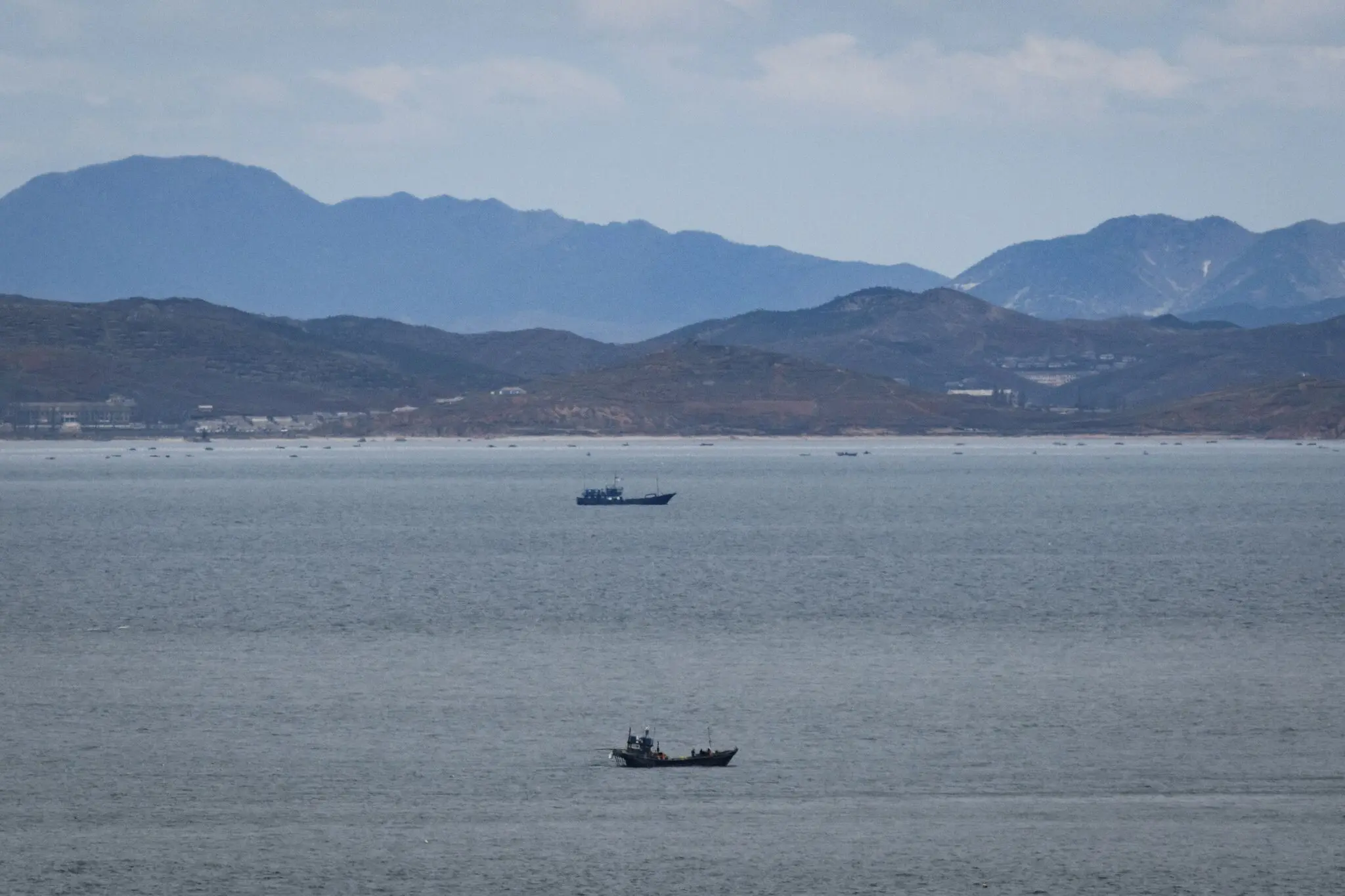
Fishing boats off the mountainous North Korean coast (Ed Jones/Agence France-Presse)
On September 5th, 2025, an article from The New York Times detailed a top-secret SEAL Team 6 mission into North Korea that took place in 2019. The report consists of testimony from over two dozen sources with knowledge of the mission, including members of the first Trump administration as well as current and former military personnel.
The Times Report
According to the report, mission planning began in 2018 amid ongoing nuclear negotiations with North Korea, when U.S. intelligence agencies informed the White House of a plan to gain an edge. The report referenced a recently developed device which would allow the U.S. military to intercept Kim Jong-Un’s communications, providing the White House with an advantage in negotiations. However, the device had to be physically installed on North Korean soil to function, requiring a direct infiltration by U.S. forces.
The mission was assigned to SEAL Team 6, an elite special operations unit of the U.S. Navy. Training for the operation began in the fall of 2018 and continued into the early weeks of February 2019, the same month President Trump announced he would meet Kim Jong-Un in Hanoi for a nuclear summit. The top secret operation involved stationing a nuclear-powered submarine off the coast of North Korea that would carry two mini subs the Seals would use to get close to the shore, from which they would swim the remaining distance.
The mission went awry when the Seals reached the shore and noticed a small boat approaching the mini subs. From their perspective, it seemed as though the approaching crew was directly on top of the subs, about to blow the mission’s cover. Moments later, a man from the North Korean boat splashed into the water. As the senior SEAL watched this unfold, he silently raised his rifle and opened fire. The remaining Seals followed in lockstep.
After opening fire, the SEAL team swam towards the boat to make sure the entire crew was dead. Upon examination of the bodies, the Seals found no uniforms or weapons. Evidence suggested the crew, which reportedly consisted of two or three men, was a group of civilians diving for shellfish, which may explain why one of the men jumped into the water. After an examination of the scene, the Seals threw the bodies into the ocean in an attempt to conceal the incident from authorities. The Seals also punctured the lungs of the bodies with their knives before doing so to ensure they would sink. The Seals then swam back to the mini subs, where they sent a distress signal, and before long were back on the nuclear sub without planting the espionage device.
The Administration’s Reaction
President Trump has denied knowledge of the mission. When asked by reporters if he could confirm the mission took place, he responded, “I don’t know anything about it. I’m hearing it now for the first time.”
The uncovering of the mission has stirred debate on the responsibility of the executive branch to inform congress of top-secret operations. The New York Times reports that the Trump administration withheld details of the mission from key committees of Congress, which legal professor Matthew Waxman claims is likely a violation of federal law. “This is exactly the kind of thing that would normally be briefed to the committees and something the committees would expect to be told about,” the professor stated. According to the report, the Biden administration conducted an investigation into the botched mission in 2021, and key members of Congress were briefed on the findings. Despite this, details of the mission were kept from the public until the Times report was released early in September.
In the immediate aftermath of the operation, multiple internal military reviews deemed the SEALs’ killing of civilians justified under the rules of engagement. Those findings remain classified.
Public Discourse
Public reactions to the mission have varied. Some commend the New York Times for releasing its findings, while others believe making the mission details public is a threat to the relationships the United States has with its adversaries. Patrick Healy, the Times’ assistant managing editor, defended the coverage, noting that particularly sensitive information was withheld in order to avoid compromising similar missions in the future.
However, others continue to insist the public benefit of the coverage fails to outweigh the potential consequences. “Transparency is one thing but there are elements of this reporting that strike me as incredibly dangerous given how contentious our relationship is with North Korea,” one user is reported to have commented on the article.
To date, there have been no responses from governments or major international organizations on the alleged events, including from the government of North Korea.
Articles 51(2) and 51(4)(a) of Additional Protocol I of the Geneva Conventions prohibit indiscriminate attacks that lack a military target as well as the targeting of civilians. Additionally, article 34(1) of Additional Protocol I prohibits the mutilation of corpses and calls for belligerents to respect the remains of the dead.
